Loading...
Serving Great Falls, MT and surrounding areas. (406) 216-0672
Heat rising through your attic floor is the reason your furnace runs all winter without keeping up. We seal every gap so the heat you pay for stays in your home where it belongs.
Attic air sealing in Great Falls closes the gaps, cracks, and holes in the attic floor that let heated air escape from your living space - most jobs take one to two days with no need to leave your home. Insulation slows heat transfer, but it cannot stop air movement. Warm air rises and pushes hard against your ceiling looking for any opening - around light fixtures, plumbing pipes, and the tops of interior walls. Once it escapes into the attic, that heat is gone. Your furnace runs longer to replace it, and your NorthWestern Energy bill climbs every winter as a result.
Many Great Falls homes were built before modern energy codes required careful air sealing, particularly in the older residential areas near downtown and the Missouri River corridor. A home built before 1980 can have dozens of unsealed penetrations in the attic floor that have been leaking heat for decades without anyone realizing it. Addressing those gaps first - before adding more insulation - is the correct order of work, and pairing attic air sealing with whole-home air sealing services addresses every level of your home at once.
The U.S. Department of Energy estimates that sealing air leaks throughout a home - with the attic being the biggest opportunity - can cut heating and cooling costs by 10 to 20 percent. In Great Falls, where the furnace runs for six months or more, that savings compounds quickly year after year.
If your gas or electric bill during a Great Falls winter seems out of proportion to your home's size or to what your neighbors pay, escaping heat is often the reason. Attic air leaks are one of the biggest contributors to high heating costs in older homes, and they are invisible until someone goes looking for them. A noticeable jump in your bill from one winter to the next is a strong signal worth investigating.
Great Falls wind is relentless in winter, and if one or two rooms get noticeably colder whenever the wind blows hard, air is moving through your home's structure. Rooms at the top of the house or at the ends of the building are most vulnerable. This is not just a comfort issue - it means your furnace is working harder than it should to compensate.
Stand in a room on a cold day and hold your hand near a recessed ceiling light or near the trim where your ceiling meets an exterior wall. If you feel a cool draft, that is air moving through an unsealed gap in your attic floor directly above you. This is one of the most direct signs that attic air sealing work is needed.
Ice dams form when heat escaping from your living space warms the roof unevenly - snow melts near the peak, runs down, and refreezes at the cold eaves. Great Falls winters are cold enough and long enough that ice dams are a real risk for homes with poor attic air sealing. If you saw ice dams last winter, warm air is getting into your attic when it should not be.
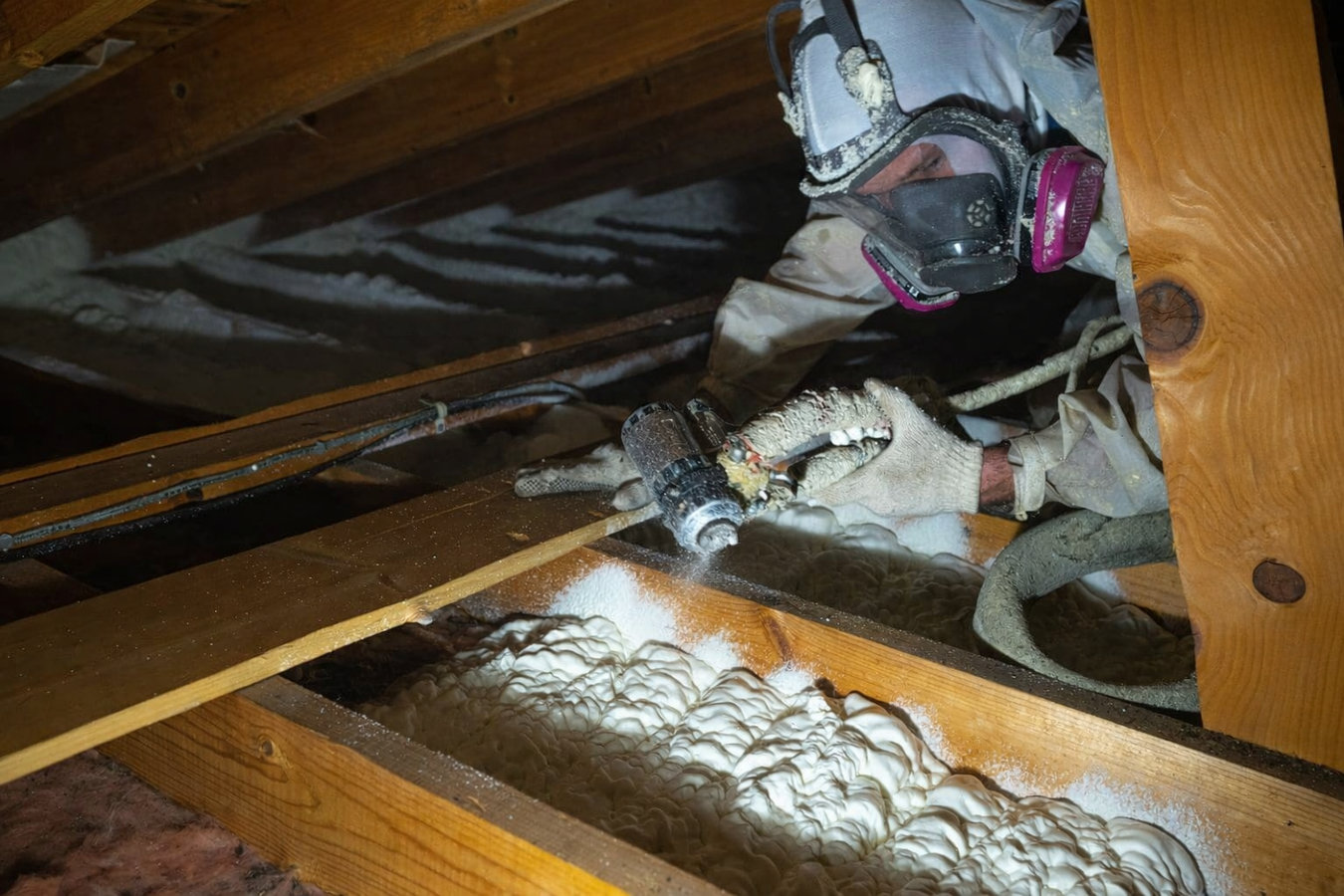
Effective attic air sealing means working methodically across the entire attic floor, not just hitting the obvious spots. We seal recessed lights, the tops of interior walls, plumbing and electrical chases, the attic hatch, and every other penetration in the ceiling structure above your living space. Where existing insulation covers these areas, we temporarily lift it, do the sealing work, and replace the material so the full coverage is preserved. We use foam, caulk, and rigid air barriers depending on the size and nature of each gap. Crawl space vapor barrier installation is a related service many homeowners address at the same time, since moisture control at the ground level complements the air tightness work done above.
For homeowners who want a measurable result, we offer blower door testing before and after the job. This diagnostic measures how much air is leaking from your home as a whole, and comparing the pre- and post-work numbers gives you a concrete improvement figure rather than just our assurance. It also confirms that the air sealing services we performed made a real difference - something homeowners in older Great Falls homes find especially valuable given how much heat those houses have been losing for years.
Best for any home where the attic floor has unsealed penetrations - the most common situation in Great Falls homes built before 1980.
Suited for homes with older recessed can lights that open directly into the attic - one of the biggest single sources of heat loss in ceilings.
The right fit for homes where the tops of interior walls are open to the attic - a gap that is invisible from inside the house but significant for heat loss.
Ideal for homeowners who want a measured before-and-after result showing the actual improvement in their home's air tightness.
Great Falls is one of the windiest cities in the United States, and that wind does something that most homeowners do not think about - it creates pressure differences across your home that actively push cold air in through gaps on the windward side and pull warm air out through gaps on the leeward side. That means even small unsealed openings in your attic have a much bigger impact here than they would in a calmer city. The heating season in Great Falls stretches from October through April or longer, so those gaps are working against you for more than half the year. Homes built during the city's mid-century growth - the craftsman bungalows near downtown, the ranch homes out toward Malmstrom - were built without any of this in mind, and many have never been sealed.
We serve homeowners throughout the region. Residents in Havre, MT and Lewistown, MT face the same wind-driven heat loss challenges, and we cover those areas as well. If you are unsure whether we work in your area, call us and we will give you a direct answer.
We ask a few basic questions - the age of your home, any comfort problems, and whether you have had any energy work done before. We respond within 1 business day and schedule a free on-site assessment. You do not need to know anything technical before this call.
We walk through your attic and, ideally, run a blower door test to measure how much air is currently leaking from your home. This gives both of us a clear baseline so you can see the actual improvement after the work is done. The assessment usually takes one to two hours.
After the assessment, you receive a written estimate that explains what we found, what we plan to do, and what it will cost. We explain every line item and answer your questions. This is also a good time to ask about any utility rebates or federal tax credits that may apply.
The crew accesses your attic, moves insulation as needed, and seals every gap across the attic floor. Insulation is replaced when complete. A final blower door test confirms the measured improvement - you see the result in writing before we leave.
We respond within 1 business day - no obligation to book. After you submit, someone from our office will call to schedule a free in-home assessment at a time that works for you.
(406) 216-0672You get a written scope before we start and a walkthrough when we finish. Our experienced crews coordinate any permits the job requires and leave you with a clear record of what was done.
We are a Great Falls company, not a national franchise sending a subcontractor to your door. We know the housing stock here - the mid-century homes near downtown, the ranch homes built in the 1960s and 1970s - and we understand what Great Falls winters demand.
We offer diagnostic testing before and after the job so you have a measured result, not just a promise. The improvement is documented in writing. That level of accountability matters in a smaller market like Great Falls, where a contractor who does not stand behind their work has nowhere to hide.
Every attic air sealing job we do follows the correct sequence - gaps sealed first, insulation added or replaced second. Adding insulation on top of unsealed gaps is a shortcut that delivers poor results. We do not take that shortcut, and we will tell you upfront if we find a situation that requires additional work before sealing can proceed.
NorthWestern Energy has offered rebate programs for qualifying energy efficiency improvements in the past - ask us about current options when you call. Request a free estimate or call (406) 216-0672.
While sealing the attic above, address moisture at the ground level with a crawl space vapor barrier - both projects together give you a complete home envelope.
Learn moreTake the air sealing work beyond the attic and address the whole home - walls, basement, crawl space, and every level where heat is escaping.
Learn moreSchedule a free estimate now - fall appointments fill up quickly, and the sooner your attic is sealed, the sooner you stop paying to heat the outdoors.