Loading...
Serving Great Falls, MT and surrounding areas. (406) 216-0672
Your building is paying for heat that goes straight through the walls and roof every winter. Commercial insulation done right stops that loss and keeps your energy bills and your staff comfortable through the Great Falls heating season.
Commercial insulation in Great Falls installs thermal protection in walls, roofs, and floors of business properties to slow heat loss and cut energy costs - most single-story projects complete in one to three days with no disruption to day-to-day operations. Great Falls sits in one of the coldest climate zones in the country, with a heating season that can stretch from September through May and temperatures that regularly drop well below zero. The state energy code sets minimum insulation requirements that are significantly higher than what is required in warmer states. Many commercial buildings in Great Falls were constructed before those standards were in place - meaning they are losing heat every day of every winter and paying for it on their utility bills. Properly insulating and air-sealing a commercial building addresses that problem directly.
A large share of Great Falls commercial buildings were built before the 1990s, when energy standards for commercial construction were far lower than they are today. These buildings often have little or no insulation in certain wall and roof assemblies, or insulation that has settled and degraded over decades of use. Great Falls is also one of the windiest cities in the United States, and wind-driven air infiltration can undermine even well-installed insulation if air sealing is not part of the job. The same approach applies whether you are looking at upgrading existing buildings or insulating new commercial construction - we offer spray foam insulation and other methods suited to commercial applications.
The ENERGY STAR Commercial Buildings program estimates that properly insulating and air-sealing a commercial building can cut heating and cooling costs meaningfully - savings that add up fast in a place like Great Falls where heating bills run high for six or more months a year.
If your gas or electric costs have been rising year over year and you have not added equipment or expanded your space, failing or insufficient insulation is one of the most common causes. In Great Falls, where heating costs are high due to the long cold winters, even a modest insulation gap can translate into hundreds of extra dollars per month. That money is going through your walls and roof, not into your business.
Great Falls is one of the windiest cities in the country. If you notice cold air moving through your space when the wind picks up - even with the heat running - that is a sign gaps in your building envelope are letting outside air in. Insulation slows heat transfer, but it does not stop air movement. That requires air sealing, and both should be done together.
If one side of your building is always colder, or if spaces near the roof or exterior walls feel noticeably different from interior areas, the insulation in those zones is likely inadequate or missing. Uneven temperatures are not a comfort problem alone - they mean your heating system is working harder than it should and wearing out faster.
A large share of Great Falls commercial buildings predate current energy standards. If your building was constructed before the mid-1990s and has never had a professional energy assessment, there is a reasonable chance it is operating with insulation that no longer meets today requirements - or that was never adequate for Montana winters to begin with. An assessment costs nothing and tells you exactly where you stand.
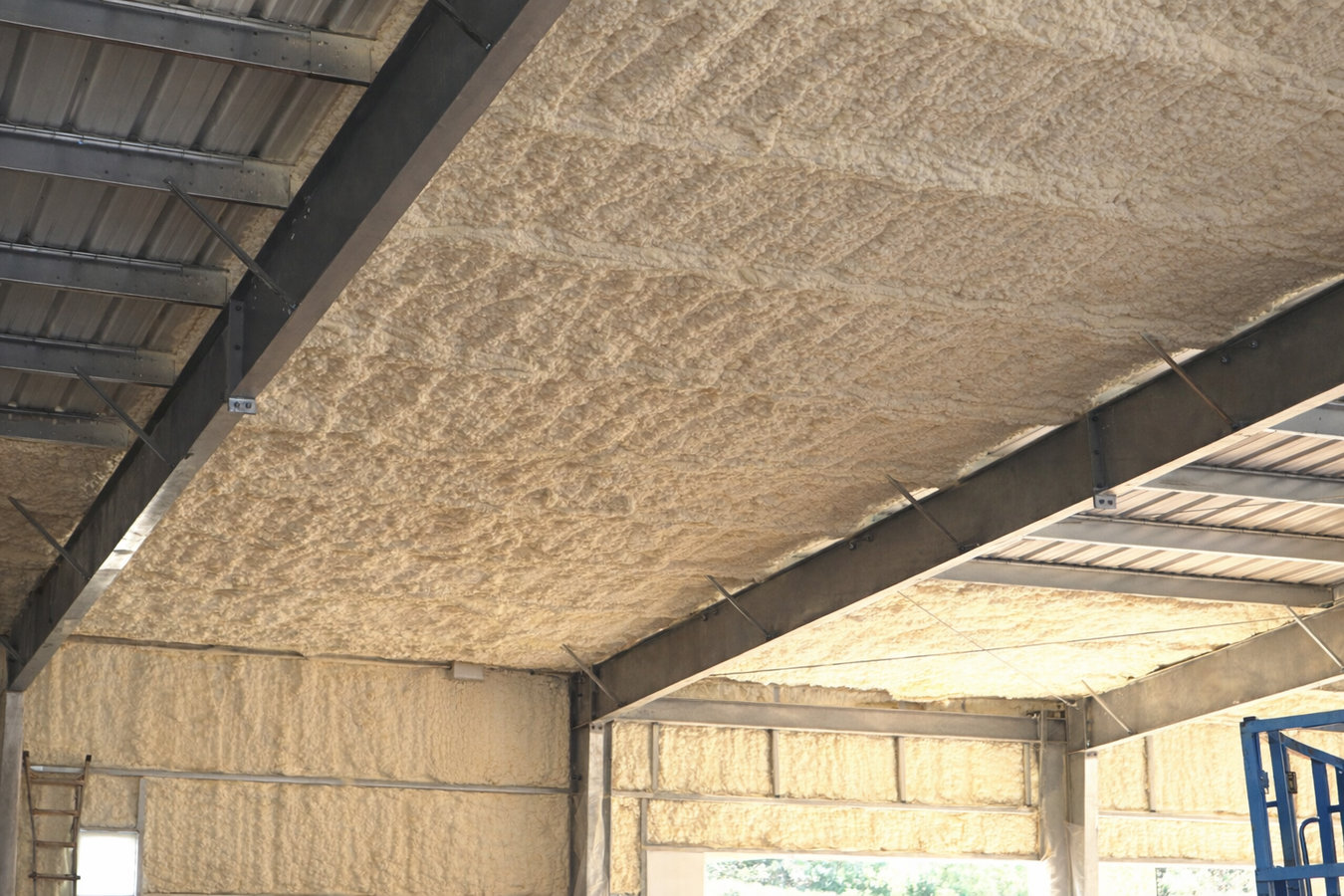
Commercial buildings have more variation in construction than homes - metal buildings, older brick masonry, wood-framed retail spaces, and concrete warehouse walls all require different approaches. We start every commercial project with an on-site assessment rather than a phone quote, because the right insulation method depends on how the building is built and where the heat is actually escaping. For buildings where air leakage is the primary problem, we install spray foam insulation that seals and insulates simultaneously - which is often the most efficient solution for older Great Falls commercial buildings where gaps have opened up over decades of use.
For buildings with large, accessible roof or wall assemblies, rigid board and blown-in systems are often more cost-effective than spray foam and can be installed quickly with minimal business disruption. We also handle basement insulation for commercial buildings with below-grade spaces, which are a common source of cold floors and elevated heating loads in Great Falls winters. Every project includes a final walkthrough before we close up any walls or access panels, and we handle the building permit process so you do not have to.
Best for older Great Falls buildings with significant air leakage - expands to fill gaps and provides both insulation and an air barrier in a single application.
Suited for flat roof assemblies and exterior wall systems where a continuous layer of insulation is needed to meet Montana energy code requirements.
The right choice for attic and roof cavity spaces in commercial buildings where access is limited and coverage needs to be thorough and even.
For Great Falls buildings where wind-driven infiltration is the primary problem - sealing gaps around ducts, pipes, and penetrations before or alongside insulation installation.
Great Falls averages more than 200 days per year with temperatures below 50 degrees Fahrenheit, and the heating season stretches from September through May. That is a long time for an under-insulated building to hemorrhage heat and dollars. The city is also one of the windiest in the United States - chinook winds can sustain at 30 to 40 miles per hour for days at a time, and gusts can top 60 mph. That wind is not just uncomfortable; it actively forces cold air through every gap in your building envelope, including gaps you would never notice on a calm day. This is why Montana commercial buildings need higher insulation levels and more thorough air sealing than what is standard in most other states. A contractor who has only worked in milder climates may not understand how to specify the right approach for a Great Falls winter.
We serve commercial properties across the region, including in Billings, MT and Helena, MT, where commercial building owners face the same combination of extreme cold, high wind, and older building stock that makes insulation upgrades such a high-return investment. Call us to confirm coverage for your specific location.
We ask a few basic questions about your building - size, age, construction type, and what problems you have been noticing. We respond within 1 business day and schedule a free on-site walkthrough. No commitment required to get a written estimate.
We inspect walls, roof or ceiling assembly, mechanical areas, and any below-grade spaces. We may use a thermal camera to find hidden air leaks and cold spots that are not visible to the eye. After the visit you receive a written estimate that specifies insulation type, coverage area, and total cost.
For commercial projects in Great Falls, a building permit is typically required before work starts. We handle the permit application and coordinate the inspection - you do not need to contact the permit office yourself. Plan for one to two weeks for permit approval before installation begins.
The crew installs the insulation with minimal disruption to your operations. Once the work is complete, we schedule the building inspection, then walk you through the finished installation before closing up any access panels. You see the work before anything is sealed.
We respond within 1 business day - no obligation to book. After you submit, someone from our office will call to schedule a free building walkthrough at a time that works around your operations.
(406) 216-0672We are a local Great Falls company. We know how Montana winters behave, what Great Falls wind does to an older building envelope, and what the state energy code actually requires for commercial construction in this climate zone. That knowledge shapes every recommendation we make.
We handle the permit application and coordinate the building inspection for your commercial project - you do not have to navigate any of that on your own. Our experienced crews document the job from written estimate through final walkthrough so you always know what was done.
Great Falls wind makes air sealing a necessity, not an optional upgrade. We seal gaps around pipes, ducts, and penetrations as part of every commercial insulation project. A building that is insulated but not air-sealed will still have cold drafts on windy days and will not deliver the energy savings you are expecting.
We serve commercial properties across 12 communities in Montana, including the Great Falls metro area. We have worked on retail spaces, office buildings, warehouses, and mixed-use properties throughout Cascade County and the surrounding region - we come prepared for what commercial buildings in this part of Montana actually look like.
The North American Insulation Manufacturers Association sets industry standards for insulation installation quality in commercial buildings - and we follow those standards on every job in Great Falls. Request a free estimate or call (406) 216-0672.
Spray foam is the most effective solution for sealing older commercial buildings against Great Falls wind-driven air infiltration while adding insulation in a single step.
Learn moreBelow-grade spaces in commercial buildings lose significant heat through uninsulated walls and floors - basement insulation addresses that loss and improves comfort at ground level.
Learn moreGreat Falls heating season starts in September - booking your insulation work now means your building is protected before the coldest months arrive and contractor schedules fill up.