Loading...
Serving Great Falls, MT and surrounding areas. (406) 216-0672
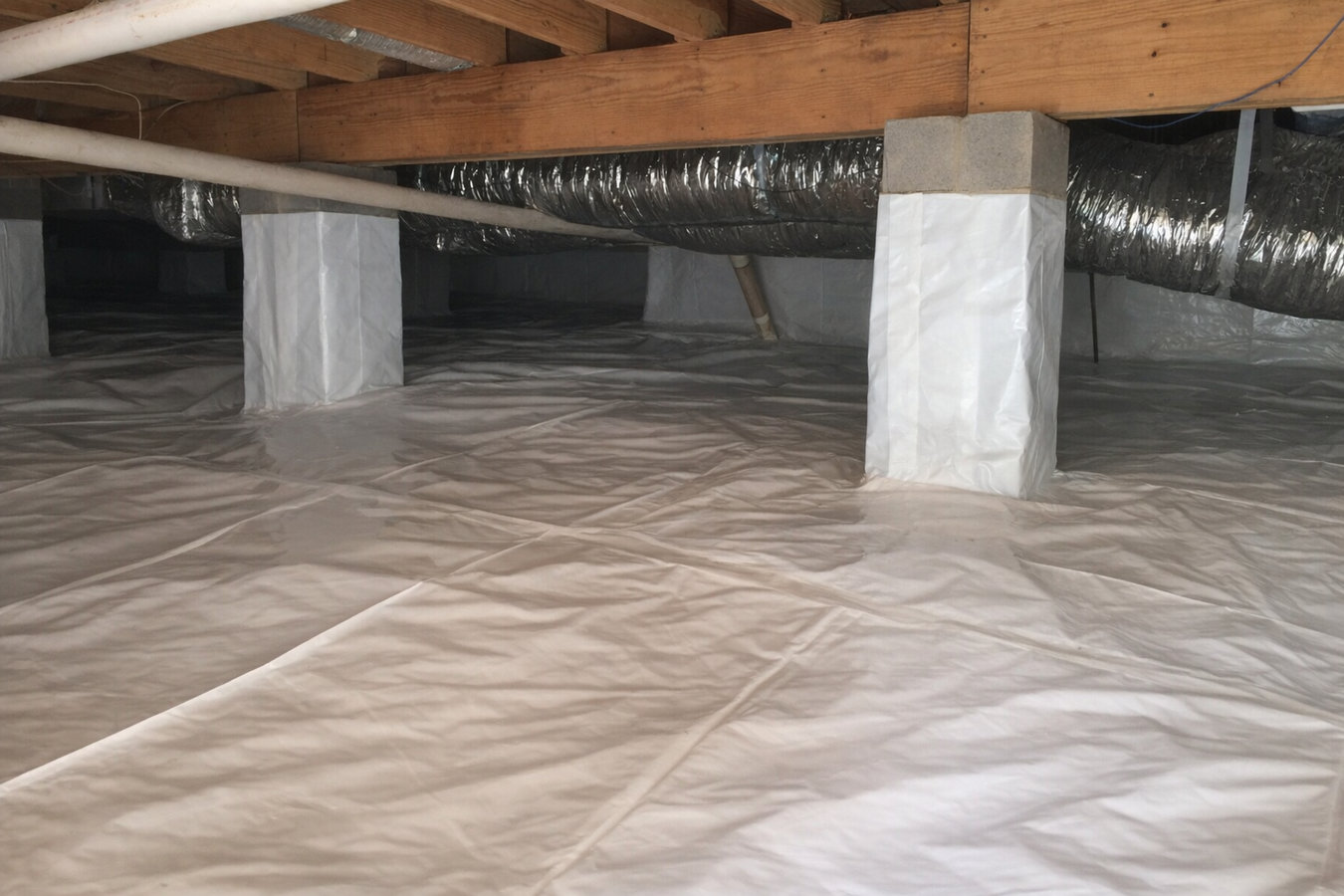
Ground moisture is rising into your home right now. A properly installed vapor barrier seals it out and protects your floors, framing, and air quality for years to come.
Crawl space vapor barrier installation in Great Falls seals bare soil with heavy-duty plastic sheeting to block ground moisture from entering your home - most jobs are completed in one day with no disruption to your routine. The soil under your home always contains water, and that water naturally moves upward. In Great Falls, where the ground goes through repeated freeze-thaw cycles from October through April and Chinook winds can melt a foot of snow overnight, the moisture pressure under your house is real and constant. Without a barrier, that moisture evaporates into your crawl space, raises the humidity, and creates the exact conditions that mold and wood rot need to get started.
Many Great Falls homes were built between the 1940s and the 1970s, when crawl space moisture protection simply was not part of standard construction. If your home is from that era and has never had this work done, there is a good chance the crawl space floor is bare soil that has been releasing moisture into your framing for decades. Pairing a vapor barrier with crawl space insulation addresses both the moisture and the thermal performance of the space in one project.
The U.S. Environmental Protection Agency notes that soil moisture rising into a crawl space is one of the most common causes of mold and indoor air quality problems in homes. Sealing that source at the ground level is a direct, practical fix - not a complicated renovation.
If a damp, earthy odor creeps into your home in the days following a big Chinook melt or a rainstorm, it is almost certainly coming up from your crawl space. The smell tends to be strongest near floor vents, in first-floor closets, or in rooms at the back of the house. That odor is mold and bacteria feeding on moisture in your subfloor - and it will get worse each season without intervention.
If your floors feel noticeably cold underfoot during Great Falls winters even with the heat running, moisture in the crawl space may be soaking the subfloor above. Slight give or softness when you walk across the floor is a more serious sign - it means wood has already absorbed enough moisture to weaken. These are things you can feel without any tools or inspections.
Shine a flashlight through your crawl space access hatch and look at the pipes, metal straps, and wood beams down there. Water droplets collecting on those surfaces means the air in the crawl space is humid enough that moisture is condensing on cooler objects. This is a direct, visible sign that ground moisture is not being controlled and the framing is at risk.
Most Great Falls homes built before 1980 have crawl spaces with no vapor barrier at all, or one that cracked and degraded decades ago. If you have lived in your home for years without anyone ever looking under the house, there is a reasonable chance the crawl space needs attention. You do not need to wait for symptoms - an inspection takes less than an hour and tells you exactly what is down there.
A vapor barrier installation is only as good as the details: the seams, the edges, and the wall coverage. We use heavy-duty polyethylene sheeting - at minimum 10 mils thick - which holds up to foot traffic during future plumbing or HVAC maintenance without tearing. Sheets are overlapped by at least 12 inches at every seam and taped securely, then run up the foundation walls and fastened in place so no soil is exposed anywhere. Before we start, we clear out any debris from the crawl space floor. When we finish, you see a clean, continuous surface with no gaps and no exposed dirt. Vapor barrier installation for basement walls and under slabs is a related service we offer for homes where moisture control is needed at multiple levels.
For homes where crawl space conditions are more severe - standing water after spring runoff, persistent high humidity readings, or badly degraded existing barriers - we assess whether a more thorough approach is needed before laying new material. We will tell you honestly what your home requires. Many homeowners also address the thermal side of the space at the same time by pairing this work with crawl space insulation, which combines moisture control and heat retention in a single project.
The right choice for most Great Falls homes - bare soil sealed with durable polyethylene sheeting, seams taped, edges fastened up the foundation walls.
Suited for older homes where a previous vapor barrier has cracked, torn, or shifted and is no longer providing effective moisture protection.
For crawl spaces with accumulated debris, old insulation scraps, or materials left behind from previous work that need to be cleared before new sheeting goes down.
Ideal for homeowners who want to address both ground moisture and heat loss in the crawl space at once - the most complete single-project solution.
Great Falls experiences some of the most dramatic temperature swings in the continental United States. Winter lows drop well below zero, and a Chinook wind can raise temperatures by 30 to 40 degrees in a matter of hours. These rapid warm-ups in late winter cause snow to melt quickly and soil to thaw unevenly, sending a surge of moisture into the ground around and under your home. The Missouri River valley location and the clay-heavy soils throughout much of the city hold water rather than draining it away, which means the ground under your crawl space can stay wet for weeks at a time after a major melt or heavy rain. Homes built in the 1940s through the 1970s - a large share of the Great Falls housing stock - were never given any protection against this.
We serve homeowners across the region, including residents in Havre, MT and Lewistown, MT, where similar older housing stock and flat-terrain soil conditions create the same crawl space moisture challenges. If you are not sure whether we cover your area, call and we will give you a direct answer.
We ask a few basic questions - the age of your home, any moisture symptoms, and whether anyone has been in your crawl space recently. We respond within 1 business day and schedule a free on-site assessment. You do not need to know anything technical before you call.
A contractor enters your crawl space - through a floor hatch or an exterior vent opening - and checks the condition of the ground, framing, and any existing plastic sheeting. The assessment usually takes 30 to 60 minutes. You get a clear report of what was found, with photos if you want them.
After the assessment you receive a written estimate breaking down materials, labor, and total cost. Every line item is explained. If additional prep work is needed before the barrier goes in, we tell you upfront - no surprises on installation day.
The crew clears the crawl space floor, lays and tapes the sheeting, and fastens the edges to the foundation walls. Most jobs finish in a single day. Before leaving, we walk you through what was done and tell you what to watch for going forward. The barrier is effective immediately.
We respond within 1 business day - no obligation to book. After you submit, someone from our office will call to schedule a free in-home assessment at a time that works for you.
(406) 216-0672We are a Great Falls company, not a national franchise sending a subcontractor to your door. We know the housing stock here - the 1940s and 1950s craftsman homes near downtown, the ranch homes from the 1960s and 1970s out toward Malmstrom - and we understand how Great Falls soil and climate affect what is under your house.
You get a written scope before we start and a walkthrough when we finish. Our experienced crews coordinate any permits the job requires and leave you with a clear record of what was done.
We do not use thin sheeting that tears after one maintenance visit. The material we install is thick enough to last and to hold up when a plumber or HVAC technician needs to access the crawl space in the future. Cheaper barriers look the same on day one but fail within a few years - ours do not.
We serve all of Great Falls and 11 surrounding communities in Montana. Homeowners across Cascade County and beyond call us because they want a contractor who knows this region - not one who drives in from out of state and has never seen what a Montana crawl space looks like after a hard winter.
The Building Science Corporation recommends sealed, protected crawl spaces as a best practice for homes in cold climates like Great Falls - and we follow those standards on every job. Request a free estimate or call (406) 216-0672.
Extend moisture protection to basement walls and under slabs - comprehensive vapor barrier coverage for every part of your home where ground moisture is a problem.
Learn moreCombine your vapor barrier project with crawl space insulation to address both moisture and heat loss in a single visit and protect floors from Great Falls winters.
Learn moreSchedule a free crawl space assessment now - Great Falls winters start early, and the sooner the ground is sealed, the sooner your home is protected.