Loading...
Serving Great Falls, MT and surrounding areas. (406) 216-0672
If your exterior walls are under-insulated, you are paying to heat the outside every time temperatures drop. Cold rooms, high bills, and drafts near outlets are all signs your walls need attention.
Wall insulation in Great Falls slows heat loss through your exterior walls and reduces cold air infiltration - most retrofit jobs for a single-family home finish in one to two days. When walls are empty or have degraded insulation, heat escapes through the wall surface every hour the furnace runs. In a climate where winters last from October through April, that adds up fast.
A significant share of Great Falls homes were built before the 1980s, when insulation standards were far lower than they are today. If your home is older, your exterior walls may have little or nothing in them. Pairing wall insulation with air sealing services addresses both heat loss through the wall material and air movement through gaps - both matter in a city as windy as Great Falls.
The U.S. Department of Energy recommends higher wall R-values for cold climates like Montana than what most older homes actually have. If your home has never had insulation work done, the walls are likely the gap that is costing you the most.
If your gas or electric bill spikes when Great Falls temperatures drop but your habits have not changed, your walls are likely letting heat escape faster than your furnace can replace it. Older homes with empty wall cavities are especially vulnerable during the sustained cold spells this area sees from November through February.
Press your hand flat against an exterior wall on a cold day. If it feels genuinely cold - not just cool - that wall is not holding heat the way it should. In a properly insulated home, interior wall surfaces stay close to room temperature even when it is well below zero outside.
Electrical outlets and switches on exterior walls connect directly to the wall cavity. If you feel cold air coming through them on a windy day, the cavity behind them is open to outside air. Great Falls winds make this problem noticeably worse than it would be in a calmer climate.
Great Falls prevailing winter winds come from the north and west. If rooms on those sides of your house are consistently harder to heat and you have added space heaters just to stay comfortable, the walls on those exposures are likely under-insulated. This is a very common pattern in older Great Falls homes.
For homes with finished walls, we most often use retrofit blown-in insulation - drilling small access holes, injecting insulation material until the cavity is fully dense-packed, then patching and finishing each hole as part of the job. The holes are small and the patching is included in every project. We also install blown-in insulation in attics and other open areas where loose fill is the best fit for the space.
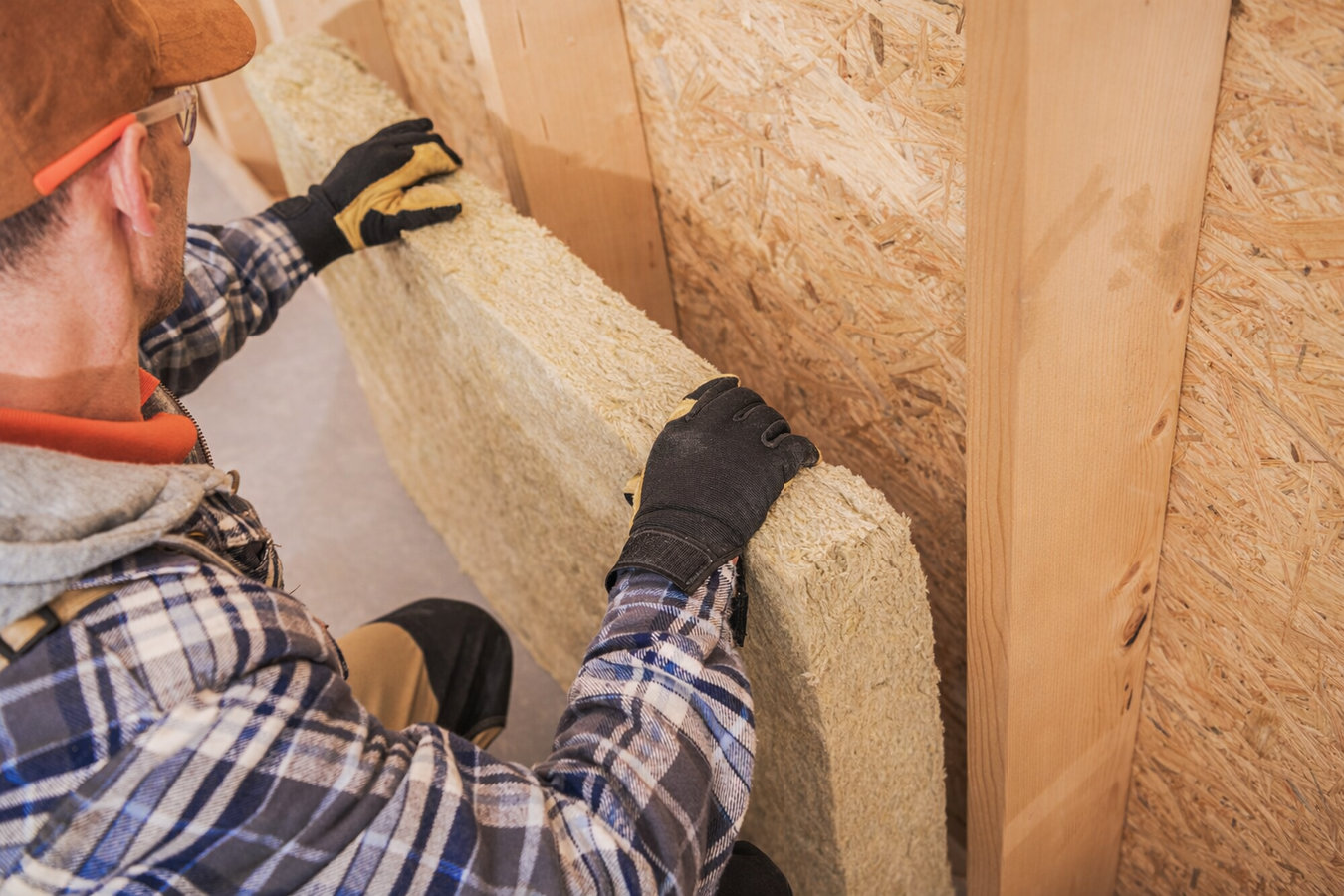
For new construction or gut renovations where wall cavities are open, batt insulation is a practical and cost-effective choice. We select the material - blown-in cellulose, blown-in fiberglass, or batt - based on your specific wall construction and the performance the job requires. Every project includes a walkthrough before we leave so you can confirm the work was done. Combining wall insulation with air sealing is the most thorough approach for older Great Falls homes where both heat loss and air infiltration are problems.
Best for existing homes with finished drywall where opening the walls is not practical.
Suited to older homes with irregular framing where standard batts leave gaps and voids.
Ideal for new construction and gut renovations where wall cavities are fully exposed.
Right for homeowners who want to know what is actually in their walls before committing to a project.
Great Falls is one of the windier cities in Montana, and wind pressure drives cold air through under-insulated walls faster than most homeowners expect. Even a wall with some insulation can lose heat quickly when north winds push against it for days at a time. A large share of Great Falls homes were built in the mid-20th century with little or no wall insulation - not because builders were careless, but because the standards of that era simply did not require it. Those homes are now carrying a comfort and energy deficit that only gets addressed when someone fills those cavities.
We serve all of Great Falls and the surrounding region. Homeowners in Helena, MT and Missoula, MT face the same older housing stock challenges, and we are available throughout western and central Montana. If you are unsure whether we cover your area, give us a call.
We will ask about your home age, approximate square footage, and what problems you have noticed. We reply within 1 business day and schedule a free on-site visit - we do not quote wall insulation accurately over the phone.
We walk through your home, check the exterior walls, and confirm what is currently in the wall cavities. You receive a written estimate covering insulation type, area to be insulated, patching, and total cost - before any work begins.
The crew drills small access holes, injects insulation to fully fill the cavity, then patches every hole before leaving. You do not need to vacate. Most single-family homes are done in one to two days.
We walk you through the finished work, show you the patched areas, and answer questions. The crew leaves your home clean. Patched areas may need a day or two to dry before painting - we will let you know what to expect.
We respond within 1 business day - no obligation to book. After you submit, someone from our office will call to schedule a free on-site visit at a time that works for you.
(406) 216-0672Working with an experienced local crew means the person in your home knows Great Falls housing and how Montana winters test a wall. You get a written scope and a documented record of the work rather than guesswork.
We cover Great Falls and a 12-area service region across central and western Montana. That range means we know the housing stock, the climate conditions, and the local permit requirements - not just general best practices.
We confirm insulation reached the full cavity before we patch the access holes. You should not have to take anyone's word for it - a reputable contractor shows you coverage was achieved before closing up the wall.
Every project starts with a written estimate that breaks down scope, material, and cost. The Insulation Contractors Association of America recommends getting a written scope before any work begins - we follow that standard on every job.
Great Falls homeowners deal with a climate that tests insulation harder than most parts of the country. We focus on getting the work right the first time - verified coverage, clean patching, and a walkthrough before we leave - so you are not calling us back to fix something that should have been done correctly from the start.
For more on recommended insulation levels for cold climates, see the North American Insulation Manufacturers Association.
Close the gaps that insulation alone cannot stop - air sealing works with wall insulation to eliminate drafts and cold spots.
Learn moreLoose-fill blown-in material for attics and open cavities where dense-pack wall methods are not the right fit.
Learn moreGreat Falls contractors book up fast in fall - reach out now to get on the schedule and go into the cold season with walls that actually hold heat.