Loading...
Serving Great Falls, MT and surrounding areas. (406) 216-0672
Cold floors and frozen pipes are not just discomfort - they are signs your crawl space is letting Montana winters into your home. We seal and insulate it so your heating system stops fighting an uphill battle.
Crawl space insulation in Great Falls puts a thermal barrier between the frozen ground and your living space - most installations are completed in one day and the improvement in floor warmth is noticeable within the first cold nights. Without it, your floors are sitting above outdoor-temperature air all winter, and your furnace compensates by running almost constantly. The U.S. Department of Energy estimates that properly air-sealing and insulating a crawl space can reduce heating costs by 10 to 20 percent for many homes.
Great Falls homes built before the 1980s typically have vented crawl spaces - a design approach that was standard at the time but is now understood to bring cold air and moisture in faster than it moves them out. Many of these older homes have little or no insulation between the floor joists, and whatever was originally installed may have sagged or absorbed moisture over decades of Montana winters and spring thaws. Pairing crawl space insulation with a crawl space vapor barrier is the most effective way to address both the thermal and moisture problems at once.
If your home also has under-insulated walls, addressing the crawl space and the walls together as part of a whole-home upgrade typically delivers the biggest combined improvement in comfort and energy costs.
If your kitchen or living room floor feels cold underfoot even with the heat on, your crawl space is likely uninsulated or the existing material has failed. In Great Falls, where temperatures regularly drop below zero for days at a time, a poorly insulated crawl space makes this problem severe enough to notice immediately.
Pipes that run through an uninsulated crawl space are exposed to the same temperatures as outdoor air in a Great Falls winter. If a pipe has frozen, burst, or a plumber has warned you about vulnerable runs under the floor, your crawl space is not providing enough thermal protection. Insulating and sealing the space properly removes that risk.
Great Falls heating season runs from roughly October through April. If your gas or electric bill has crept up over recent winters without a change in your habits, heat loss through the floor could be a significant contributor. An insulation contractor can assess whether your crawl space is part of the problem during a free on-site visit.
Shine a flashlight into your crawl space access hatch. If you see wet soil, standing water, insulation that has fallen away from the floor joists, or moisture stains on the wood framing, the space needs attention. Spring snowmelt in Great Falls pushes moisture upward through the soil, and without a vapor barrier that cycle repeats every year.
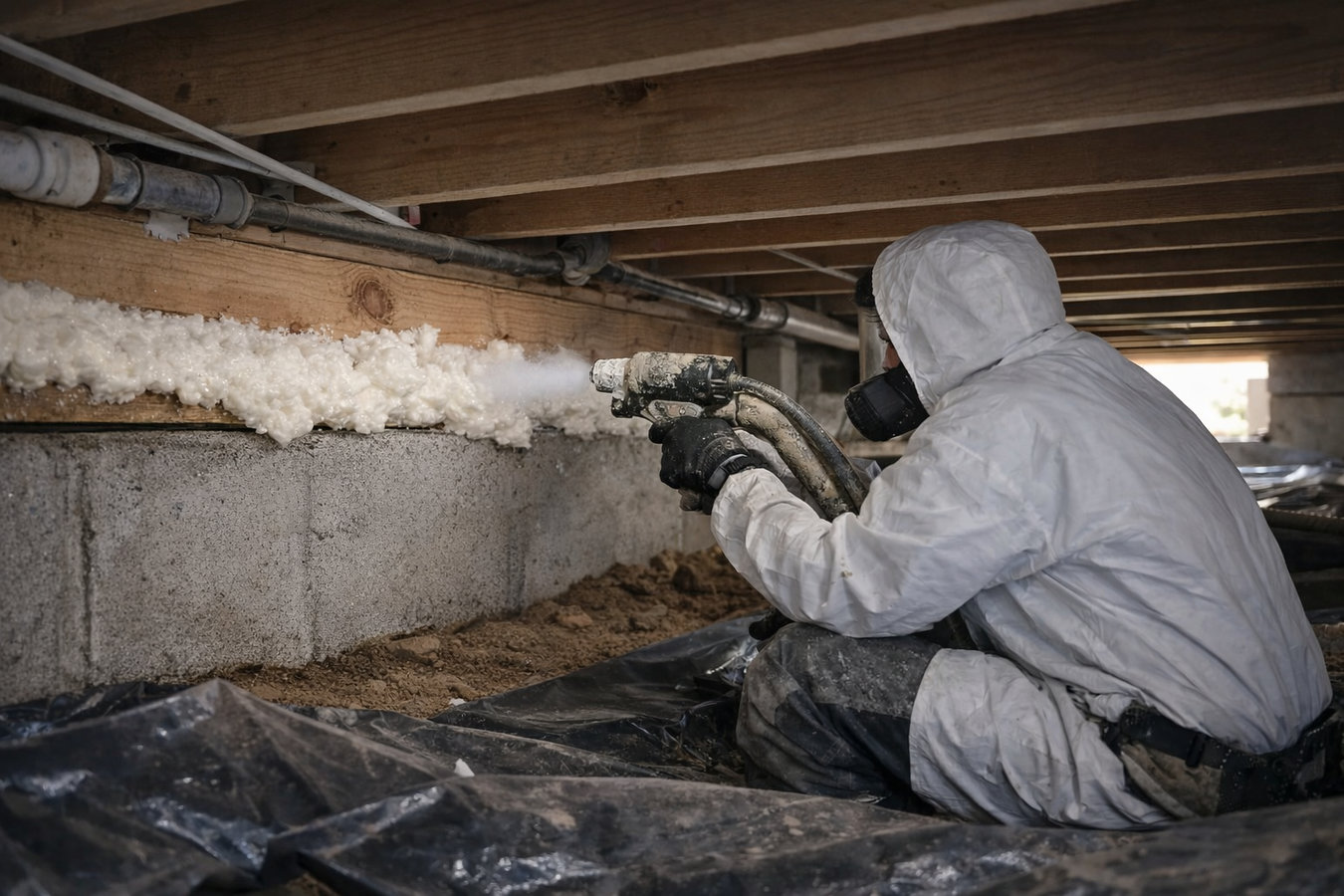
We install both floor joist insulation and full crawl space encapsulation, and the right choice depends on your home's specific conditions. Floor joist insulation - typically fiberglass batts or spray foam between the joists - is a solid upgrade for homes where moisture is not a major issue and the goal is primarily to stop heat loss from the floor. For older Great Falls homes with vented crawl spaces and moisture history, full encapsulation tends to perform better because it addresses cold air, ground moisture, and pipe protection in a single system.
Every crawl space job includes rim joist sealing - the band joist where your floor framing meets the foundation is one of the biggest air leakage points in most homes and is often overlooked. We also coordinate with crawl space vapor barrier installation when the job calls for it, and we can recommend follow-up wall insulation if your assessment reveals that the walls are also contributing to heat loss.
Good for homes where moisture is managed and the primary goal is stopping floor-level heat loss.
Best for older homes with vented crawl spaces, moisture history, or pipes at freeze risk in Great Falls winters.
Recommended for any home where the band joist is exposed to outdoor temperatures - one of the highest-impact improvements for older homes.
Essential alongside any crawl space project to block ground moisture from working upward into the floor framing year-round.
Great Falls sits in north-central Montana and regularly sees January temperatures drop below zero, with cold snaps that push well past that. The city is also among the windiest in the state year-round - wind pressure drives cold air into every gap in a crawl space foundation wall, making air sealing even more important here than in calmer climates. A home with an uninsulated, vented crawl space in Great Falls is essentially sitting on top of outdoor air all winter. The rim joist and foundation vents are the biggest entry points, and a good installation addresses both.
We serve homeowners throughout the region. Customers in Kalispell, MT and Missoula, MT deal with similar crawl space challenges in Montana's cold climate, and we are available across the state. Call us to confirm whether we can reach your location.
We ask about your home's age, your crawl space access, and whether you have noticed cold floors, moisture, or frozen pipes. We respond within 1 business day and schedule a free on-site estimate - the crawl space needs to be seen in person for an accurate quote.
We access the crawl space through the floor hatch or exterior panel - this usually takes 30 to 60 minutes. We check existing insulation, moisture levels, vapor barrier condition, and rim joist air leakage. You receive a written quote covering method, materials, and total cost before we leave.
The crew arrives with all materials. They start by removing any damaged existing insulation, then install the vapor barrier, new insulation, and rim joist sealing in sequence. Most jobs are done in a day; larger or more complex crawl spaces may take two. You do not need to leave your home.
Before leaving, we walk you through the finished crawl space so you can see the vapor barrier coverage and insulation placement. There is no curing period - your home is fully usable the moment we are done, and you may notice warmer floors within the first cold night.
We respond within 1 business day - no obligation to book. After you submit, someone from our team will call to schedule a free on-site visit at a time that works for you.
(406) 216-0672Most contractors insulate the floor and call it done. We also seal the rim joist - the band of framing that sits on top of your foundation wall - because that is where cold air enters fastest in a Great Falls winter. Skipping it leaves a major gap in the thermal barrier.
Installing insulation without addressing ground moisture is a common mistake in Montana's wet spring climate. We assess both on every job and recommend a vapor barrier where it is needed - so the insulation we install does not absorb moisture and degrade within a few years.
Our experienced crews document the job from the written estimate through the final walkthrough, so you always have a record of what was done. We also handle permit requirements where they apply so you do not have to track that process yourself.
We have worked on homes throughout Great Falls - from the older neighborhoods near downtown to ranch homes on the east side of the city. We know what crawl spaces in this area typically look like and what they need to perform through a Montana winter.
Crawl space work is not visible once it is done, so it is easy to cut corners and hard to check. We build every job the way it needs to be built to last through the Montana climate - and we walk you through it before we leave so you know what was done.
Stop ground moisture from working upward into your floor framing - often installed alongside crawl space insulation.
Learn moreExtend your home's thermal protection to exterior walls after the crawl space is addressed.
Learn moreBefore the next Great Falls winter, protect your pipes and cut your heating bill - call us today or submit a request and we will respond within 1 business day.