Loading...
Serving Great Falls, MT and surrounding areas. (406) 216-0672
Moisture rising from the ground silently damages your floors, framing, and insulation. We install durable vapor barriers that stop it at the source and protect your home for years.
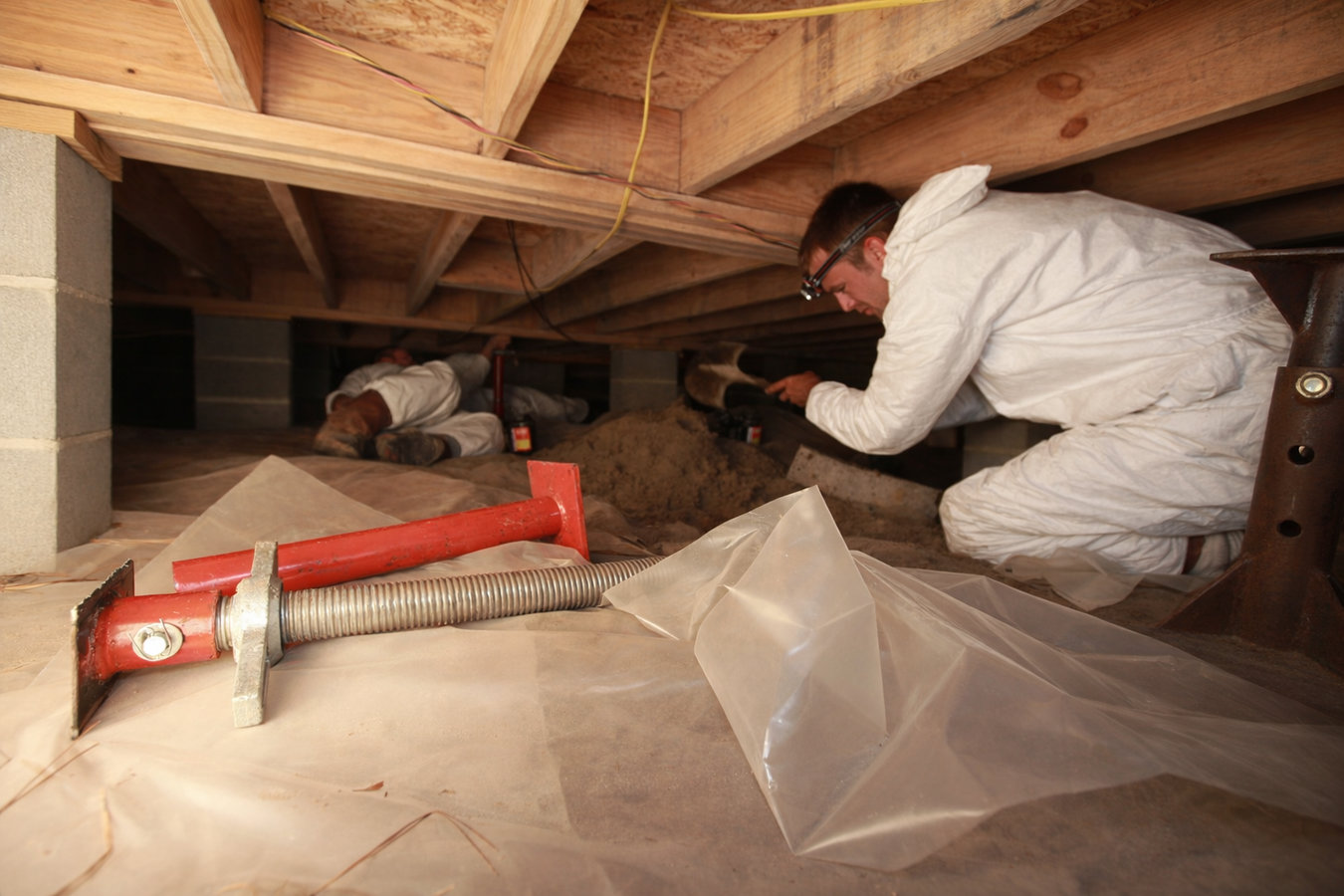
Vapor barrier installation in Great Falls places a continuous sheet of heavy-duty plastic across your crawl space floor, up the foundation walls, and - when needed - against basement walls or under concrete slabs to block moisture from the ground before it reaches your framing and insulation - most residential jobs are done in a single day. Think of it as a raincoat for the underside of your house. The soil under your home always contains water, and in Great Falls, where freeze-thaw cycles repeat from October through April, that moisture is under constant pressure to move upward. Without a barrier, it evaporates into your crawl space, wets your insulation, and quietly works on your floor joists and subfloor for years before anything visible happens.
Many Great Falls homes built before 1980 have no moisture protection under the floor at all, or degraded thin plastic that was installed decades ago and has since torn or shifted. These are exactly the homes where a properly installed vapor barrier delivers the clearest results - warmer floors, a drier crawl space, and insulation that works the way it should. Pairing a new vapor barrier with retrofit insulation in the same project addresses both the moisture problem and the thermal performance of your home at once.
The U.S. Department of Energy identifies moisture control as one of the most important and cost-effective steps a homeowner can take to protect a home in a cold climate - and a vapor barrier is the direct, practical way to act on that recommendation.
If your floors feel noticeably colder than the rest of your home during Great Falls winters, or if there are spots that feel slightly springy or soft underfoot, moisture may have already gotten into the subfloor. Cold floors in a well-heated home often mean the insulation beneath them is wet and no longer doing its job. This is one of the most common early signs that moisture protection is needed.
A persistent musty or earthy smell coming from your floors or lower walls - especially after the snow melts in March and April - is a strong signal that moisture is moving up from your crawl space. In Great Falls, the spring thaw releases a large amount of ground moisture at once, and homes without a vapor barrier often show this symptom first. The smell is caused by mold or mildew growing on damp wood surfaces below your floor.
If you have ever looked into your crawl space and noticed water droplets on pipes, metal straps, or wood beams, that is moisture in the air condensing on cooler surfaces. This is a direct sign that ground moisture is evaporating into the space and has nowhere to go. Left alone, it leads to rust, rot, and eventually structural damage to the floor framing above.
If your gas or electric bill has been creeping up over the past few winters and nothing obvious has changed, wet insulation under your floor could be the reason. Moisture-soaked insulation loses most of its ability to hold heat, which forces your furnace to run longer to keep your home warm. In a Great Falls winter that runs five or six months, this effect shows up clearly on your utility bills.
We install vapor barriers in crawl spaces, basement walls, and under concrete slabs - wherever ground moisture is entering your home. In crawl spaces, we use 10-mil polyethylene sheeting as a minimum, with seams overlapped by at least 12 inches and taped shut, and edges fastened up the foundation walls so no soil is left exposed. In basement applications, the approach is adapted to the wall surface and drainage conditions. The goal in every case is a continuous, sealed layer with no pathways for moisture to get through. Crawl space vapor barrier installation is the most common version of this work, and we have specific experience with the soil conditions and housing stock in Great Falls and surrounding communities.
For homes with more significant moisture challenges - standing water after spring runoff, high crawl space humidity readings even after a basic barrier is in place, or radon concerns that need to be addressed alongside moisture control - we assess the full picture before recommending materials or scope. Many homeowners in older Great Falls neighborhoods also pair vapor barrier work with retrofit insulation to get the most out of a single project and avoid coming back to do the thermal work later.
The most common application - seals bare soil in an unfinished crawl space and is the right starting point for most older homes in Great Falls.
Suited for homes where moisture is entering through basement walls as well as the floor, often in older homes near the Missouri River valley with high seasonal groundwater.
Used during construction or during a basement floor replacement to prevent ground moisture from migrating up through a concrete slab.
For homes where a previous vapor barrier has cracked, torn, or shifted over the years and is no longer providing effective protection - common in homes built before 1990.
Great Falls averages around 160 days per year below freezing, and the ground freezes and thaws repeatedly from late fall through early spring. Each cycle pushes ground moisture upward through the soil with more force than most homeowners realize. The city sits in the Missouri River valley, and much of the soil in Cascade County has a high clay content that holds water rather than draining it - clay stays wet long after the last Chinook melt, which means the ground under your home can stay damp for weeks at a time. Many homeowners assume the dry surface air means moisture is not a problem, but the soil does not care what the air feels like outside. And in Great Falls, winds create pressure differences across your home that can actively pull soil gases - including radon, which is elevated in parts of Cascade County - upward through an unsealed crawl space floor.
We serve homeowners throughout the area, including residents in Billings, MT and Bozeman, MT, where similar older housing stock and Montana freeze-thaw conditions create the same moisture challenges under the floor. If you are not sure whether we cover your area, call and we will give you a straight answer.
We ask about your home - the size, whether you have a crawl space or basement, and any specific symptoms you have noticed. This usually takes five to ten minutes. We respond within 1 business day and schedule a free in-person visit so we can see the space before giving you a price.
A contractor accesses your crawl space or basement and checks the current condition of the ground, any existing plastic, the height and accessibility of the space, and whether any prep work is needed first. The assessment is free and is the only way to give you an accurate quote - crawl spaces vary widely from one house to the next.
You receive a written estimate after the assessment that breaks down materials and labor. We explain what thickness of material we are recommending and why, how seams and edges will be handled, and whether any associated work might require a permit. A trustworthy contractor answers these questions without pressure.
The crew lays the vapor barrier material, tapes all seams, and fastens edges to the foundation walls. Most jobs are done in one day. When finished, we walk you through the completed work, remove all packaging and debris from your property, and provide a written record of what was installed - including material thickness - so you have it for future reference.
We respond within 1 business day - no obligation to book. After you submit, someone from our office will call to schedule a free in-home assessment at a time that works for you.
(406) 216-0672We are a Great Falls company that works in Cascade County and surrounding communities - not a national franchise. We know the soil conditions here, the housing stock, and what a Montana crawl space looks like after a hard winter. That local knowledge matters when the goal is to get the installation right the first time.
Our experienced crews document the job from written estimate through final walkthrough, and we walk you through the scope before any work starts. You get a clear record of exactly what was installed.
We use durable sheeting and tape every seam - not just overlap them. Thin barriers and untaped seams fail fast, especially in a crawl space where maintenance visits occasionally happen. The work we do is built to last through Great Falls winters for a decade or more.
Radon levels are elevated in parts of Cascade County, and the Montana Radon Program recommends all homeowners test. We are familiar with the local risk profile and can discuss how vapor barrier work fits into a broader moisture and air quality plan - including when a dedicated radon system makes sense alongside the barrier.
The Montana Radon Program recommends all Montana homeowners test for radon - ask us how vapor barrier work relates to radon entry when you call. Request a free estimate or call (406) 216-0672.
Pair your vapor barrier with retrofit insulation to address both moisture and heat loss in a single project - the most complete upgrade for older Great Falls homes.
Learn moreFocused crawl space vapor barrier installation for homes where ground moisture under the floor is the primary concern - the most common moisture protection project we perform.
Learn moreSchedule your free vapor barrier assessment now - the sooner the ground is sealed, the sooner your insulation, floors, and framing are protected from the next freeze-thaw cycle.